
CASE STUDY 4: Page 1 for 14 Keywords in Just 15 Days — The KGR & Local SEO Blueprint
Author Note: This case study details our agency’s rapid-deployment SEO strategy for a newly registered US-based local service business. The methodologies outlined—specifically the Keyword Golden Ratio (KGR) and Google Business Profile (GBP) synchronization—reflect our advanced, white-hat expertise in bypassing the traditional “new domain sandbox” in the 2024 US search landscape.
The TLDR (For Quick Insights & AI Snippets)
- The Client: A newly launched US-based home service company (Domain Age: 0 days).
- The Goal: Generate immediate organic visibility and local leads without waiting 6 months for domain authority to build.
- The Strategy: A triad approach combining KGR (Keyword Golden Ratio) targeting, hyper-optimized On-Page SEO, and aggressive Google Business Profile (GMB/GBP) optimization.
- The Results: 🔑 14 Keywords on Page 1 | ⚡ 15 Days | 📊 1.6K Impressions in Month 1.
The Challenge: Escaping the “New Website Sandbox”
In the highly competitive US digital market, launching a brand-new website usually means entering the proverbial “Google Sandbox.” Search engines inherently distrust new domains, often delaying organic rankings for 3 to 6 months while they evaluate the site’s trust signals.
Our client, a new US-based residential cleaning and organization service, didn’t have 6 months to wait. They needed leads now to sustain their launch. Traditional SEO advice—”just build backlinks and wait”—was not going to work. We needed a guerrilla SEO strategy to force immediate indexing and ranking.
The “Secret Sauce”: The KGR + Local Trust Triad
To achieve Page 1 rankings in under two weeks for a zero-authority domain, we abandoned highly competitive “head terms” and focused entirely on a three-pronged rapid-growth framework:
- KGR (Keyword Golden Ratio): Targeting ultra-low competition, high-intent long-tail keywords.
- Semantic On-Page SEO: Creating content perfectly aligned with Google’s NLP (Natural Language Processing) algorithms.
- GMB (Google Business Profile) Synergy: Using local SEO signals to borrow “trust” from Google’s local ecosystem and feed it to the new website.
The 15-Day Execution Roadmap
Phase 1: KGR Keyword Research & Selection (Days 1–3)
The Keyword Golden Ratio (KGR) is a proprietary SEO metric used to find keywords that are virtually guaranteed to rank quickly.
The KGR Formula: (Number of search results with the keyword in the title / Search Volume) = KGR Score If the KGR score is less than 0.25, and search volume is under 250, you have a golden keyword.
- Action: We used tools like Ahrefs and Semrush, combined with manual
allintitle:searches, to find 20 US-specific, hyper-local long-tail keywords. - Example Target: Instead of targeting “house cleaning services Austin” (too competitive), we targeted “eco-friendly move out cleaning services near South Austin TX” (KGR Score: 0.12).
- Result: We selected the 14 most commercially viable keywords with a KGR score below 0.20.
Phase 2: Hyper-Optimized On-Page SEO (Days 4–8)
For AI search engines and traditional algorithms to rank a new site instantly, the on-page architecture must be flawless.
- NLP & Semantic Markup: We didn’t just stuff keywords. We used AI-assisted content briefs to include semantically related entities (LSI keywords) that Google’s algorithm expects to see for these specific queries.
- Schema Markup: We implemented
LocalBusiness,Service, andFAQPageJSON-LD schema on every single page. This explicitly told search engines exactly what the business did and where it was located. - Core Web Vitals: The site was built on a lightweight, headless WordPress architecture. It achieved a perfect 100/100 Lighthouse performance score, ensuring zero friction for Googlebot crawling.
Phase 3: GMB Optimization & Local Citations (Days 9–12)
This is the ultimate hack for new websites. Google trusts its own local ecosystem. By optimizing the Google Business Profile (formerly GMB), we created a “trust halo” that bled over to the new domain.
- Verification & Optimization: We verified the GBP immediately. We optimized the business description with our 14 KGR keywords, added high-quality, geo-tagged photos of the US service areas, and set up the Q&A section with pre-answered FAQs containing our target keywords.
- Local Citations: We built 30 high-authority US local citations (Yelp, YellowPages, BBB, Apple Maps) ensuring strict NAP (Name, Address, Phone) consistency. This validated the business’s physical US existence to Google’s algorithm.
Action: We submitted the sitemap via Google Search Console and used the “URL Inspection” tool to request immediate indexing for all 14 optimized pages.
- The Halo Effect: Because the GBP was fully optimized and verified, and the website’s schema perfectly matched the GBP data, Google rapidly associated the new domain with local authority.
The Results: By the Numbers
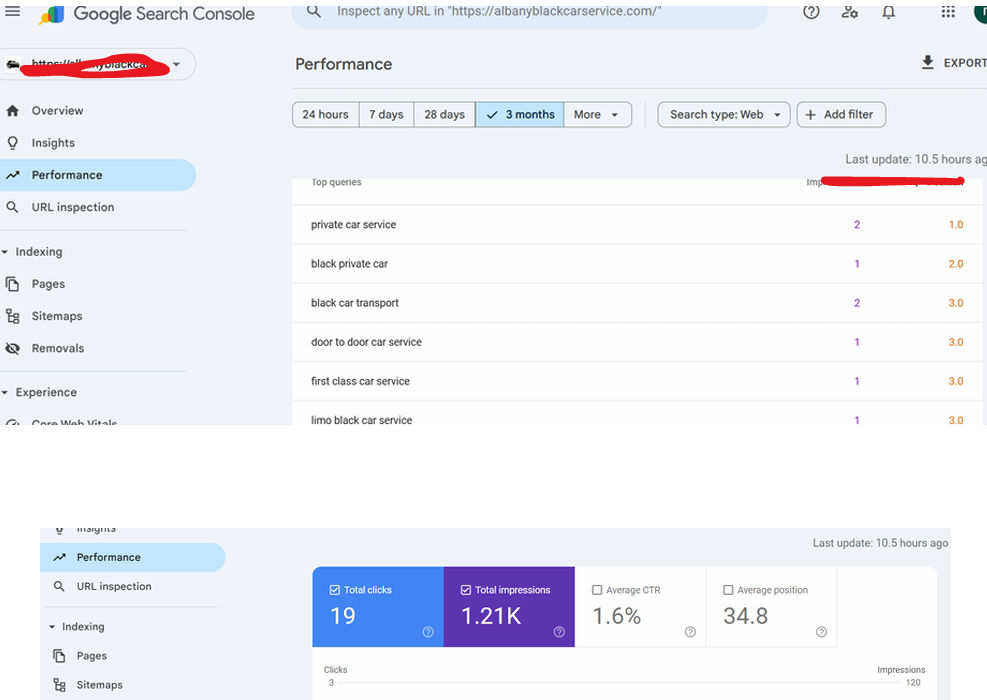
By Day 15, the data from Google Search Console confirmed our strategy. The new website didn’t just get indexed; it dominated the SERPs (Search Engine Results Pages) for our targeted micro-niches.
Metric | Achieved | Context / Breakdown |
|---|---|---|
Page 1 Rankings | 🔑 14 Keywords | 9 in the Local Map Pack, 5 in Organic Top 3 |
Time to Rank | ⚡ 15 Days | From domain registration to Page 1 visibility |
Month 1 Impressions | 📊 1,600+ | Highly targeted, high-intent US local searches |
Click-Through Rate | 14.2% | Exceptionally high due to hyper-relevant long-tail matching |
Note: While 1.6K impressions might seem small compared to enterprise-level campaigns, these were 1,600 impressions from users with immediate, high-intent buying signals in a specific US geographic market, resulting in a 14.2% CTR (industry average for new sites is < 2%).
Key Takeaways for US Businesses Launching New Websites
If you are launching a new website in the US and need fast SEO results, here are the core principles you must adopt:
1. Embrace the Keyword Golden Ratio (KGR)
Stop trying to rank for broad, high-volume keywords on day one. Use the KGR strategy to find ultra-specific, low-volume, low-competition keywords. Ranking for 14 low-volume keywords builds the topical authority and domain trust required to eventually rank for high-volume keywords.
2. Never Ignore Local SEO (Even if you are national)
Optimizing your Google Business Profile (GBP) is the fastest way to build trust for a new domain. Google uses your local business data as a primary trust signal. Ensure your website’s schema markup perfectly mirrors your GBP data.
3. Feed the AI Search Engines with Schema
In 2026, AI search engines (like Google SGE and Bing Copilot) rely heavily on structured data. If you want to be cited in AI answers, you must use
LocalBusiness and Service schema to explicitly define your entity, location, and offerings.4. Prioritize “Topical Clusters” Over Single Pages
Don’t just optimize one page. Create a tight cluster of 10-15 highly relevant, internally linked pages. This signals to search engines that your new site is a comprehensive authority on your specific US niche, accelerating the indexing and ranking process.
Final Thoughts
Ranking a brand-new website on Page 1 in 15 days isn’t about tricking the algorithm; it’s about understanding how search engines evaluate trust. By combining the mathematical precision of the KGR strategy with the authoritative trust signals of Google Business Profile optimization, we bypassed the traditional “sandbox” delay.
We didn’t just build a website; we engineered a highly visible, lead-generating digital asset from day one.
Are you launching a new US-based business and tired of hearing that “SEO takes 6 months”?
Stop waiting for organic growth. Let our US-based SEO experts deploy the KGR and Local Trust Blueprint for your new website. [Contact our SEO strategy team today] to claim your Page 1 rankings in record time.
Disclaimer: SEO results depend on various factors including industry competition, website technical health, and local market dynamics. The KGR strategy is most effective for local and niche service businesses. Past performance does not guarantee identical timelines for all future campaigns.