Clicks: The Engagement Indicator
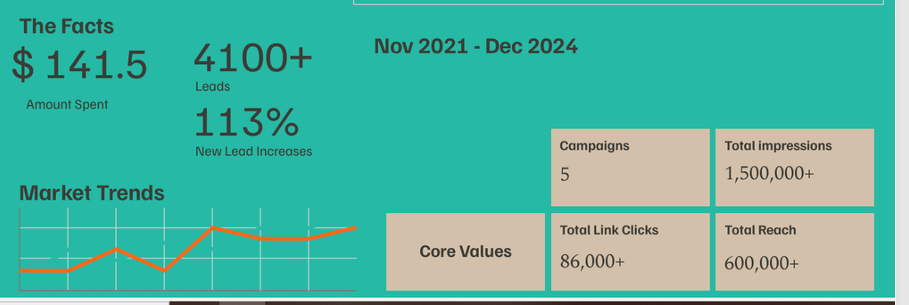
Perhaps most importantly, our campaigns generated over 86,000 clicks. Clicks represent active user engagement—the moment someone moves from passive viewing to active interest
This metric is vital for measuring how well your content resonates with your target audience and drives them toward conversion.
When you calculate the click-through rate (CTR) by dividing clicks by impressions and multiplying by 100, you get a percentage that shows campaign effectiveness.
Our CTR of approximately 5.7% significantly exceeds industry averages, indicating highly relevant and compelling content.
The 5-Campaign Framework: Strategic Diversity for Maximum Impact
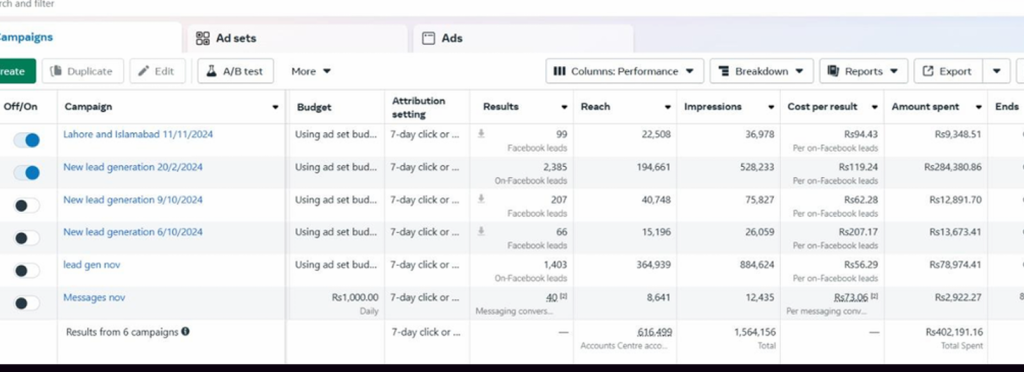
Rather than putting all resources into a single campaign, we deployed five distinct but interconnected campaigns, each serving a specific purpose within the overall marketing funnel.
Campaign 1: Brand Awareness Foundation
The first campaign focused on establishing broad brand visibility. Using display advertising and social media placements, we targeted top-of-funnel audiences with compelling visual content. This campaign generated the highest impression volume, laying the groundwork for subsequent engagement-focused initiatives.
Campaign 2: Audience Segmentation Precision
Building on initial awareness data, the second campaign employed advanced audience segmentation. We identified high-potential customer segments based on behavior patterns, demographics, and engagement levels from Campaign 1. This targeted approach improved relevance and increased click-through rates significantly.
Campaign 3: Content-Driven Engagement
The third campaign shifted focus to value-driven content marketing. By creating educational blog posts, infographics, and video content addressing common pain points, we attracted organic traffic while nurturing leads through the consideration phase. This campaign demonstrated how quality content amplifies paid efforts.
Campaign 4: Retargeting Optimization
Recognizing that most conversions require multiple touchpoints, Campaign 4 implemented sophisticated retargeting strategies. Users who engaged with previous campaigns but didn’t convert received personalized follow-up messages tailored to their specific interests and behaviors. This approach dramatically improved conversion efficiency.
Campaign 5: Conversion Acceleration
The final campaign concentrated on bottom-of-funnel activities, targeting warm leads with time-sensitive offers, testimonials, and clear calls-to-action. This campaign converted awareness and interest into tangible business results, completing the customer journey.
Key Strategies That Drove Dominant Performance
Data-Driven Decision Making
Every campaign adjustment was informed by real-time analytics. We continuously monitored performance metrics, identifying which elements drove the best results and scaling those components while optimizing underperforming areas. This agile approach ensured resources were allocated efficiently throughout the campaign lifecycle
.
Multi-Channel Integration
Rather than operating campaigns in silos, we created seamless experiences across multiple platforms. Users might encounter our brand on social media, then see display ads while browsing other sites, receive email follow-ups, and finally engage with search ads—all delivering consistent messaging that reinforced brand recognition and trust.
Creative Excellence
Compelling visuals and persuasive copy formed the backbone of our success. Each campaign featured professionally designed creative assets that captured attention in crowded digital spaces. A/B testing allowed us to refine messaging continuously, ensuring maximum resonance with target audiences.
Strategic Budget Allocation
With limited resources, smart budget distribution proved critical. We allocated more investment to high-performing channels and campaigns while maintaining presence across all five initiatives. This balanced approach maximized overall impact without sacrificing any component of the strategy.
Lessons Learned: Applying These Insights to Your Business
Start with Clear Objectives
Define specific, measurable goals before launching any campaign. Whether aiming for brand awareness, lead generation, or direct sales, clarity of purpose guides every strategic decision
.
Embrace Testing and Optimization
Never assume your first version is your best version. Continuous testing of headlines, images, calls-to-action, and targeting parameters reveals opportunities for improvement that static campaigns miss entirely
.
Focus on the Complete Customer Journey
Single-touchpoint thinking limits potential. Map out the entire path from initial awareness to final conversion, ensuring each stage receives appropriate attention and resources
.
Measure What Matters
While vanity metrics like impressions provide context, focus on metrics tied to business outcomes. Track clicks, conversions, cost per acquisition, and return on investment to understand true campaign value
.
The Competitive Advantage: Why This Approach Works
Our strategy succeeded because it combined proven digital marketing best practices with innovative execution
. By understanding target audiences deeply, tailoring content to their needs, and selecting strategic channels thoughtfully, we created campaigns that resonated authentically
.
The 5.7% click-through rate demonstrates that relevance trumps volume. While some marketers chase massive impression counts with generic messaging, our targeted approach ensured every impression had higher probability of generating meaningful engagement.
Conclusion: From Performance to Domination
Achieving 1.5 million impressions, reaching 600,000 people, and generating 86,000+ clicks across five coordinated campaigns proves that strategic digital marketing delivers exceptional results. But beyond the numbers, this case study illustrates a fundamental truth: successful campaigns require planning, execution excellence, and continuous optimization.
Your business doesn’t need unlimited budgets to compete effectively. It needs smart strategy, data-driven decisions, and commitment to excellence at every touchpoint. Whether you’re managing small-scale initiatives or enterprise-level campaigns, these principles remain constant.
Ready to transform your digital marketing from merely performing to truly dominating? Start by auditing your current campaigns against these benchmarks, identify gaps in your strategy, and implement the frameworks outlined above. The difference between good and great isn’t always about spending more—it’s about thinking smarter.
Key Takeaway: Digital marketing success comes from integrating multiple campaigns that work together strategically, focusing on both reach and engagement, and continuously optimizing based on performance data. When executed properly, this approach doesn’t just meet expectations—it exceeds them dramatically.